
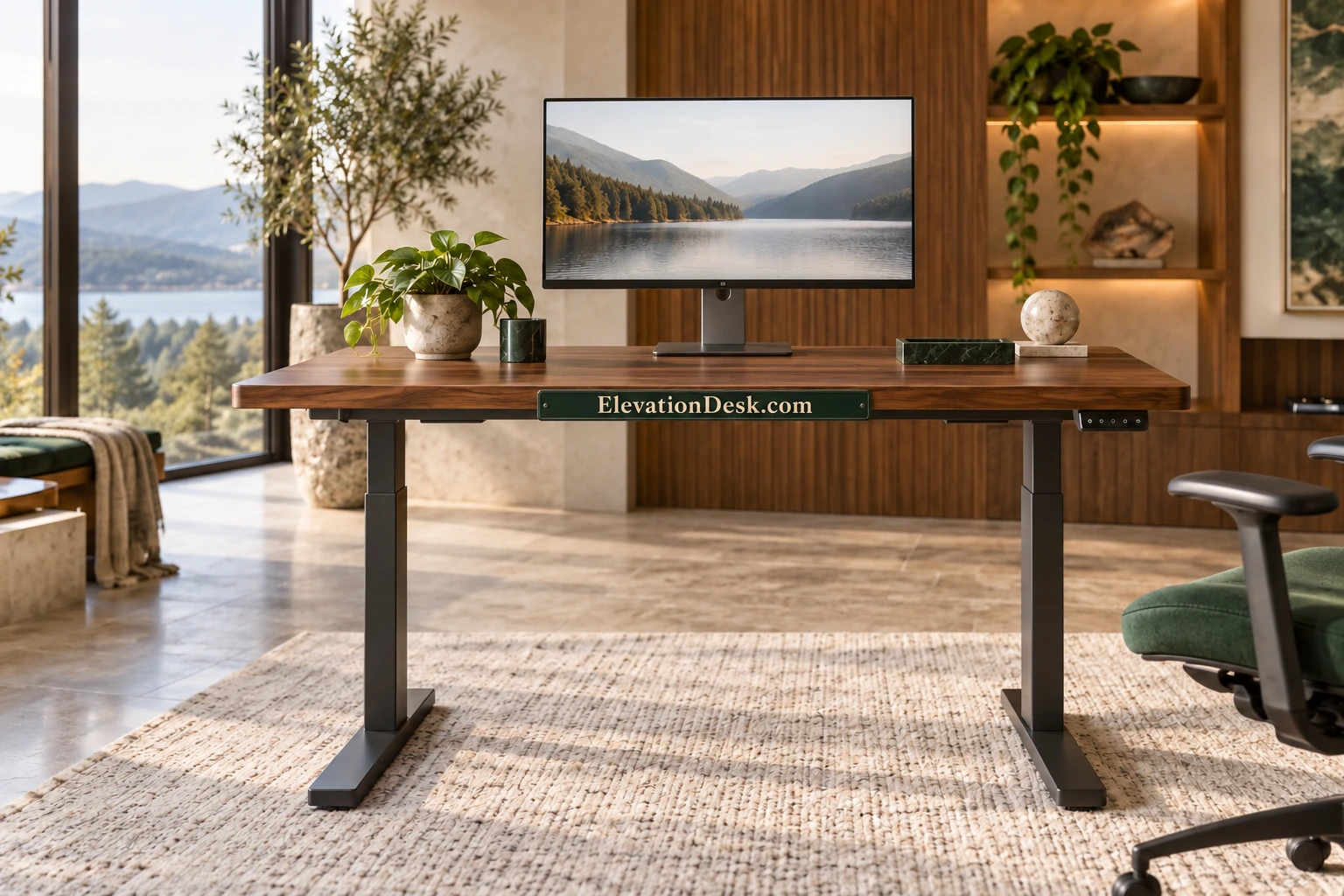
A new standing desk company can begin with a small, focused offer. One dependable frame, two desktop sizes and a restrained finish selection may give customers more confidence than dozens of combinations that are difficult to compare. ElevationDesk.com fits this focused furniture concept because the name points directly toward an adjustable desk. The following is an illustrative launch plan, not an existing product range.
Start with the customer’s actual setup
The first customer could be a home worker replacing a fixed desk, with one monitor, a laptop and a room that also matters outside working hours. That buyer wants to know how the desk will fit, how it looks at seated height and how much effort assembly takes. A founder can learn more by watching several people measure their rooms than by asking whether a walnut desk looks attractive in a photograph.
Early interviews should separate current frustrations from general preferences. Ask where equipment is placed, what stays under the desk and which delivery arrangements are possible. Ask customers to show a cable that would become tight if the surface moved. These observations can turn into product requirements, such as access to a cable tray or a clearly documented monitor-arm clamping area.
Define a first offer that can be explained
A focused launch might offer one tested adjustable frame with two surfaces and a small set of optional accessories. The frame, surface and fittings must be evaluated together. A load rating for one component does not answer every question about an assembled configuration, and the business should explain how the manufacturer defines that rating.
The customer-facing offer could include the desk, the assembly hardware, a clear setup guide and access to support. Each accessory should solve an identifiable problem. A tray might carry power equipment, while a grommet could route leads through the surface. Adding accessories simply to lengthen a catalog makes selection harder and creates more combinations for the business to support.
A product page can show the complete configured desk beside the individual parts included in the package. A customer should be able to tell whether an image includes an optional monitor arm, a separately purchased chair or a cable accessory included in the base price. That distinction is ordinary product honesty and a useful way to prevent disappointment.
Make comparison easier
The range needs a comparison that helps customers choose between the two surface sizes. Give width and depth, show a realistic equipment arrangement and explain the space occupied by the feet. A tabletop can fit between two walls while the legs or chair still conflict with the room. Photographs should therefore include a wide view as well as material details.
A founder should use relevant workstation references carefully. OSHA’s workstation desk guidance treats clearance and placement of equipment as parts of the whole setup, rather than treating adjustment alone as a complete answer. Link to that guidance where it supports a sizing explanation. Do not turn general workspace advice into a medical promise about the product.
Build a practical distribution path
An initial direct-to-consumer launch could use room-planning content and demonstrations to reach people already considering a desk. A short video showing assembly, height travel and cable movement can answer questions that a styled image leaves open. The business can then offer a measured comparison guide to readers who are working out whether the range fits their equipment.
The founder might approach a small number of home-office designers for product feedback and demonstrations. Any paid or supplied-product relationship should be disclosed. A referral arrangement is useful only if the business can fulfill the orders and support the resulting customers. Launching broad promotions before packaging and support are ready can expose operational weaknesses quickly.
Work through one example before expanding
Imagine an illustrative configuration with a walnut-finish surface, a dark frame and a removable cable tray. A test customer has a monitor arm, a laptop dock and a power outlet near the floor. The prototype review should follow the full movement from low to high, observe the leads and check access to the controls. It should also include the chair approaching the desk and the route used to enter the room.
The customer receives the same packaging and instructions intended for launch. Ask them to describe where the instructions were unclear and record missing information before changing the guide. A founder who assembles every prototype personally can miss the difficulty faced by someone opening the cartons for the first time.
Prepare the operations behind the promise
The business needs a supplier agreement, representative testing, packaging suitable for the surfaces and a process for damaged deliveries. Support should be able to identify the frame revision and the component involved. Spare parts, replacement times and the limits of a warranty deserve planning before the first order, because they affect what the product page can honestly say.
Returns also need a workable process. A large desk surface is awkward to repack, and customers should understand their responsibilities before purchase. The founder should evaluate the cost of both outbound and return handling while setting the offer. This plan does not assume a particular margin, sales volume or acquisition cost; those figures must come from the actual product and market.
Validate the narrow range
The next step is to test one complete configuration with target buyers and document the changes they request. If most questions concern size, clarity or setup, improve those areas before adding another finish. If the two sizes cannot serve the intended rooms, reconsider the range rather than asking the brand name to resolve the mismatch.
ElevationDesk.com could give this focused launch a distinct category-connected identity. An acquiring business would supply the furniture, operations and evidence. To discuss the domain, submit a Buyer inquiry with a short description of the proposed range. The domain-only offer does not include the illustrative products or services described here.